Handmade Museum Quality Oil Painting Reproductions & Custom Portrait
Handmade Museum Quality Oil Painting Reproductions & Custom Portrait

Category: Iconic Art Styles
Author: Angel Art House Editorial Team
"In the future, everyone will be world-famous for 15 minutes."
When Andy Warhol uttered this prophecy in 1968, he couldn't have predicted the rise of Instagram, TikTok, or the viral culture of the 21st century. Yet, half a century later, Warhol remains the undisputed prophet of modern fame and consumerism.
From the neon-colored portraits of Marilyn Monroe to the stark repetition of Campbell’s Soup Cans, Warhol’s work didn't just mirror American culture—it manufactured it. For art collectors and interior design enthusiasts alike, the "King of Pop Art" represents the perfect intersection of high culture and mass appeal.
In this edition of our Iconic Art Styles series, we deconstruct the techniques behind Warhol's genius, explore why his work hangs in the world's most prestigious museums, and discuss how you can bring this vibrant, rebellious aesthetic into your own living space.
Before he was the icon of the New York avant-garde, Andrew Warhola was a successful commercial illustrator on Madison Avenue. He drew shoes, designed window displays, and understood one thing better than anyone else: Selling.
Unlike the Abstract Expressionists before him (like Rothko or Pollock), who treated art as a deep, spiritual struggle, Warhol embraced the superficial. He famously said, "Making money is art and working is art and good business is the best art."
He established "The Factory," his legendary New York studio. The name was intentional. It wasn't an atelier; it was a production line. He surrounded himself with superstars, drag queens, and bohemian drifters, creating an ecosystem where art was churned out like automobiles on an assembly line. This philosophy challenged the very definition of what an artist—and art itself—should be.
To understand Warhol's style is to understand his rebellion against the "human touch." He didn't want his paintings to look like they were painstakingly brushed by hand; he wanted them to look machine-made.
Here are the three pillars of the Warhol aesthetic:
Warhol popularized photographic silkscreen printing in fine art. This process allowed him to take a photograph (like a publicity still of Marilyn Monroe), transfer it onto silk, and push ink through it onto a canvas. The result was a grainy, high-contrast image that felt removed from reality—much like a celebrity feels removed from the public.
Why paint one Coke bottle when you can paint a hundred? Warhol used repetition to numb the viewer. Whether it was car crashes, electric chairs, or soup cans, repeating an image over and over stripped it of its emotional weight, turning it into a mere pattern. It was a commentary on how mass media desensitizes us to everything, from tragedy to glamour.
If you look closely at a Warhol portrait, the colors often don't line up perfectly with the outlines. The lipstick might bleed off the lips; the eyeshadow might sit too high. This "off-register" effect mimics cheap newspaper printing. It creates a sense of vibration and energy, making the static image feel alive and immediate.
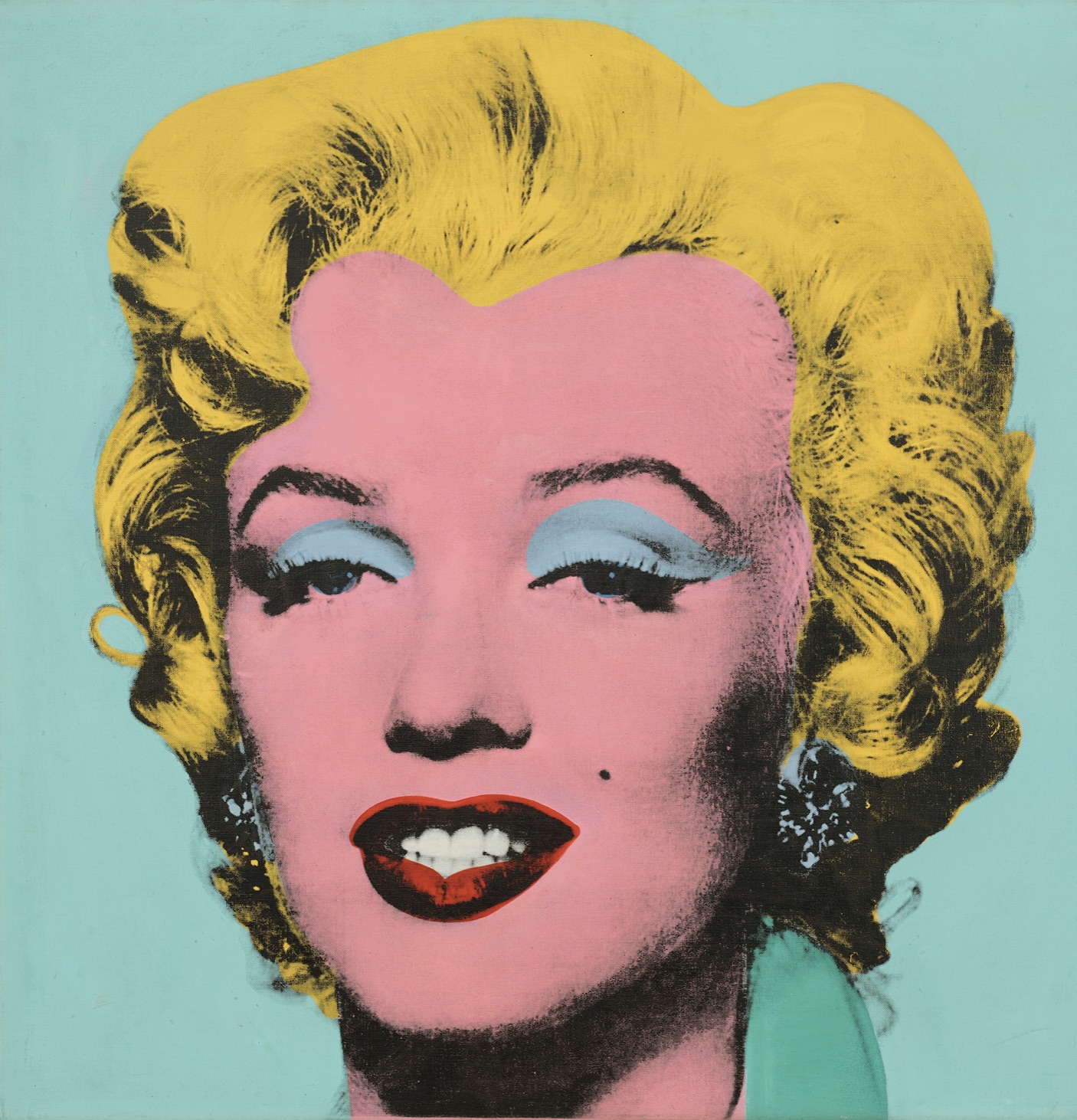
Painted shortly after her tragic death, Warhol’s Marilyn is not a portrait of a person, but a portrait of a product. By using a publicity photo from the film Niagara, Warhol froze Monroe in her prime. He applied garish, unnatural colors—bright yellow hair, turquoise eyelids—transforming her into a religious icon for a secular age. The contrast between the bright, vibrant panels and the fading black-and-white panels in his Diptych series symbolizes her mortality versus her immortality as a brand.

When first exhibited, these 32 canvases baffled critics. Why soup? Warhol claimed he ate it for lunch every day for 20 years. But deeper down, the soup can represented the democratization of American happiness. As Warhol noted, "A Coke is a Coke and no amount of money can get you a better Coke than the one the bum on the corner is drinking." The soup cans were a celebration of uniformity.
Why does Warhol’s work remain a staple in luxury interior design today? Because it is the ultimate "Statement Piece."
Styling Tip: When displaying Pop Art, bigger is often better. A single, oversized canvas with bold colors commands more attention than a cluster of small prints.
While original Andy Warhol prints now command tens of millions of dollars at auction, the vibrant aesthetic of Pop Art is accessible to everyone who appreciates its boldness.
At Angel Art House, we believe you shouldn't just admire art history—you should live with it.
Because many iconic modern works (like those of Warhol, Rothko, or Basquiat) are subject to strict copyright restrictions, we do not list these specific images in our public shopping catalog. We respect the intellectual property of artist foundations.
However, our studio is limitless.
Are you inspired by a specific masterpiece you've seen in a museum? Or perhaps you want your own portrait painted in this iconic, colorful Pop Art style?
Our professional artists specialize in "Custom Commissions." We don't just print images; we hand-paint them oil on canvas, capturing the texture, the brushwork, and the soul of the style you love.
How it works:
Don't settle for a cheap paper poster. Experience the depth and texture of a real oil painting.


