10 Disturbing Historical Paintings
Throughout history,
oil paintings have been a powerful medium for artists to convey emotions, stories, and social commentaries. Some of these artworks, however, are not just beautiful or thought - provoking but deeply disturbing, often because they confront viewers with harsh realities, violence, or moral dilemmas. Here are ten such historical oil paintings that have left an indelible mark on the art world.
1. The Nightmare | John Henry Fuseli | 1781
The Nightmare is a renowned
oil painting created by John Henry Fuseli in 1781. This remarkable work is a cornerstone of the Gothic art movement. The painting depicts a woman in a deep slumber, with a demonic incubus sitting on her chest and a spectral horse peering in from the background. Fuseli masterfully uses dark colors and dramatic lighting to create an atmosphere of dread and unease. It challenges traditional ideas of beauty and showcases the power of the subconscious, leaving a lasting impression on viewers with its disturbing yet captivating imagery.
2. Saturn Devouring His Son by Francisco Goya
Painted around 1819 - 1823, this is one of Goya's "Black Paintings." It shows the mythological figure Saturn in a fit of madness, devouring his own son. The grotesque and violent imagery is both shocking and disturbing. Goya uses dark, earthy tones to create a sense of horror. Saturn's wild eyes and the blood - smeared body of his son make this oil painting a vivid representation of the darker aspects of human nature and the cycle of violence.
3. The Angel of Death | Richard Tennant Cooper | 20th Century
"The Angel of Death" is an impactful
oil painting crafted by Richard Tennant Cooper in the 20th century. This piece stands out for its unique blend of realism and the macabre. Set in a dimly lit interior, the painting features a skeletal, winged figure - the angel of death - hovering ominously over a bedridden figure. Cooper's detailed brushwork brings every element to life, from the tattered robes of the angel to the frail form of the dying person. Through this work, he explores themes of mortality and the unknown, making it a thought - provoking addition to the world of oil paintings.
4. Dante and Virgile | William Bouguereau | 1850 
"Dante and Virgile" is a remarkable oil painting created by William Bouguereau in 1850. This masterpiece showcases Bouguereau's signature academic style, renowned for its precision and lifelike depictions. The painting captures a pivotal moment from Dante's "Divine Comedy", where Dante, guided by the poet Virgil, traverses the infernal regions. Bouguereau uses vivid colors and meticulous details to bring the two figures and the eerie, shadowy underworld to life. It not only displays the artist's technical prowess but also his ability to convey the emotional and narrative depth of the literary source, making it a celebrated work within the realm of oil paintings.
5. Guernica by Pablo Picasso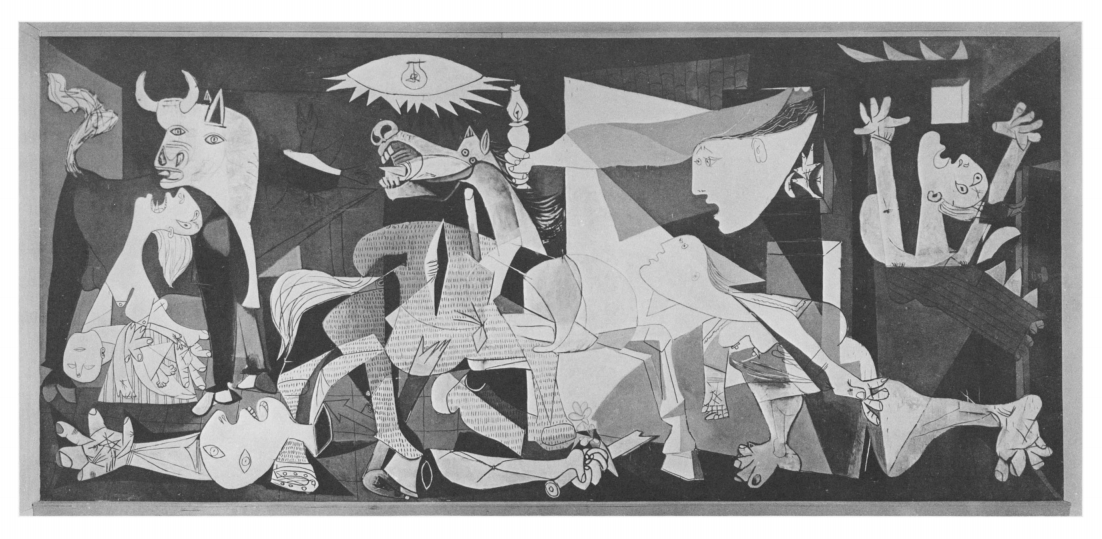
This 1937 oil painting is a powerful anti - war statement. Picasso created it in response to the bombing of the Basque town of Guernica during the Spanish Civil War. The monochromatic palette of black, white, and gray, along with the distorted figures of people and animals in agony, conveys the horror and chaos of war. There are screaming faces, falling bodies, and a sense of utter despair, making it one of the most iconic and disturbing paintings of the 20th century.
6. Anguish | August Friedrich Albrecht Schenck | 1878

"Anguish" is a compelling
oil painting created by August Friedrich Albrecht Schenck in 1878. This work powerfully captures the raw emotion of its title. Set against a dark, moody backdrop, it shows a figure in the throes of deep distress. Schenck's deft use of brushstrokes and a somber color palette enhances the sense of despair. The detailed rendering of the figure's contorted posture and pained expression draws the viewer into their torment. This oil painting serves as a poignant exploration of human suffering and the depths of emotional turmoil, leaving a lasting impression on all who behold it.
7. The Nightmare by Henry FuseliFuseli's 1781
oil painting features a woman in a deep sleep, with a demonic incubus sitting on her chest and a horse's head emerging from the shadows. The painting plays on themes of fear, sexuality, and the subconscious. The use of dark colors and the strange, nightmarish figures create a sense of unease and horror, as if the viewer has entered the woman's terrifying dream world.
8. The Scream by Edvard Munch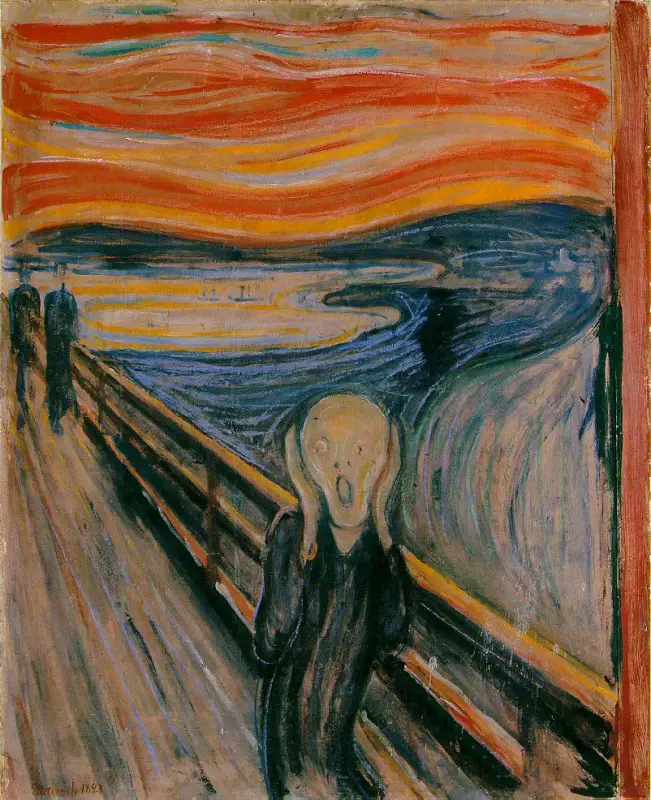
This 1893 oil - pastel painting is one of the most recognizable artworks in the world. Munch portrays a figure on a bridge, screaming in the face of a blood - red, swirling sky. The distorted figure and the turbulent landscape express the artist's own feelings of anxiety, alienation, and the overwhelming sense of existential dread. The simplicity yet power of the image makes it a disturbing symbol of the human condition.
9. Las Meninas by Diego Velázquez
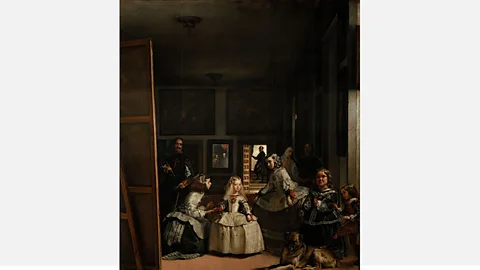
While not disturbing in a violent sense, this 1656 oil painting is conceptually unsettling. It shows the Infanta Margarita and her entourage in the royal palace. Velázquez himself is depicted at work, and the mirror in the background reflects the king and queen. The viewer is left to wonder about the relationships between the figures, the nature of representation, and the power dynamics at play. The ambiguity and the complex layering of perspectives make it a painting that challenges the viewer's understanding of art and reality.
10. Old Man's Death | László Mednyánszky | 1890

"Old Man's Death" is a profound
oil painting by László Mednyánszky, created in 1890. This masterpiece portrays a solemn and heart - wrenching moment. In a dimly lit room, an old man lies on his deathbed, surrounded by his loved ones. Mednyánszky skillfully uses warm, earthy tones to evoke a sense of both sorrow and intimacy. The expressions on the faces of those present, from the grieving family to the solemn priest, are rendered with incredible detail. This oil painting not only captures a private, human experience but also delves into themes of mortality and the circle of life, making it a moving and memorable work.


