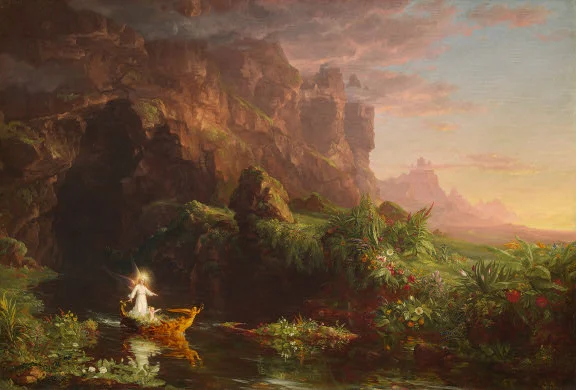
Thomas Cole’s Oil Painting Series The Voyage of Life: A Journey Through Allegory1. Childhood (1842)Cole’s oil painting Childhood depicts an infant cradled in a golden boat, gliding through a luminous Edenic landscape rendered in rich oil glazes. The angelic guardian steering the vessel embodies divine oversight, while lush flora and radiant dawn hues exemplify Hudson River School romanticism. Measuring 134 x 194 cm on canvas, this work merges spiritual allegory with meticulous natural detail, foreshadowing life’s cyclical struggles through jagged downstream rocks.
 2. Youth (1842)
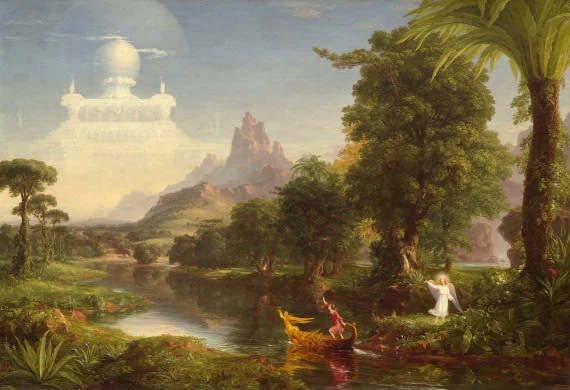
In this oil painting, the adolescent pilot steers toward a celestial palace, symbolizing unchecked ambition. Cole’s dramatic contrasts—shadowy crags against gilded skies—reflect Romanticism’s tension between idealism and peril. The 19th-century canvas critiques materialism through John Milton-inspired symbolism, with the retreating angel signaling autonomy’s risks. The river’s sharp bend, rendered in textured impasto, warns of disillusionment amid grandeur.
 3. Manhood (1842)
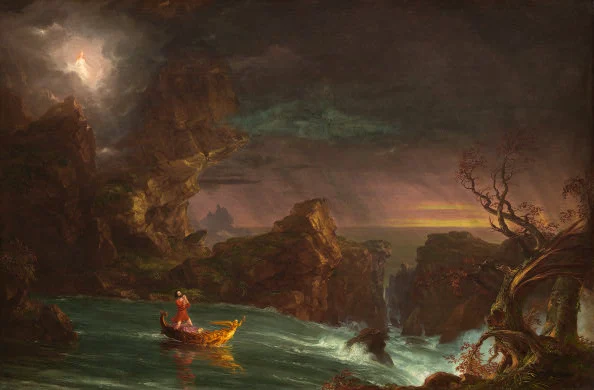
Chaos defines this oil painting: storm-wracked gorges and fractured light symbolize midlife crises. Darkened impasto textures mirror industrial-era moral decay, while the distant angel underscores spiritual isolation. Cole’s critique of progressivism emerges through barren trees and lightning-struck cliffs, yet a haloed light suggests redemption. The canvas’s turbulent composition remains a hallmark of 19th-century allegorical landscapes.
 4. Old Age (1842)
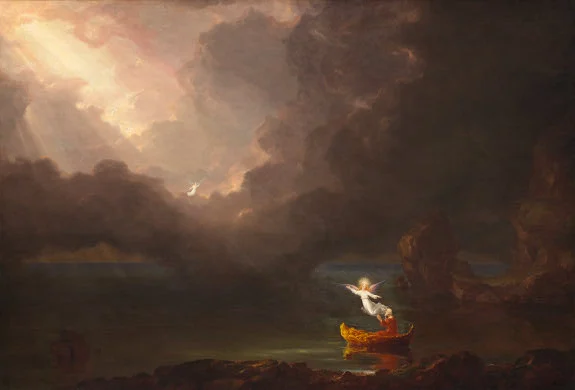
Cole’s finale depicts twilight serenity as the boat drifts toward celestial light. Ethereal glazes soften the 133.4 x 196.2 cm canvas, symbolizing transcendence over mortality. Monoliths and a broken hourglass frame the journey’s end, while Renaissance-inspired angels signal divine reunion. This oil painting synthesizes Romantic spirituality with Hudson River School naturalism, concluding life’s voyage in pantheistic harmony.
 Contextual Overview
Thomas Cole’s 1842 oil painting series The Voyage of Life epitomizes Hudson River School philosophy, blending allegory with sublime landscapes. Each canvas—crafted with oil on canvas—explores existential themes: innocence, ambition, crisis, and transcendence. Inspired by John Bunyan and German Romanticism, Cole critiques industrialization while celebrating nature’s moral authority. The series remains pivotal in 19th-century American art, bridging spiritual inquiry and ecological reverence.


